You've heard turmeric is good for you. You've seen the golden lattes, the vibrant powders in grocery stores, and the endless rows of supplements in the wellness aisle. But here's what most people miss: **Turmeric and Curcumin are not interchangeable.** While they come from the same plant, their effects on the body, their concentration, and their therapeutic applications vary significantly.
Key Takeaways
- Turmeric is the whole root, containing hundreds of compounds, but only about 3% curcumin by weight.
- Curcumin is the primary active "polyphenol" responsible for the root's anti-inflammatory and antioxidant properties.
- Bioavailability is the biggest challenge; raw curcumin is poorly absorbed by the human body without a catalyst.
- BioPerine® (black pepper extract) is scientifically proven to increase curcumin absorption by up to 2000%.
In this guide, we will dive deep into the science of the "Golden Spice," explore why the whole root might not be enough for therapeutic needs, and how you can ensure your body actually absorbs the benefits you’re paying for.
What Is Turmeric? (The Whole Root)
Turmeric (*Curcuma longa*) is a flowering plant of the ginger family, native to Southeast Asia and the Indian subcontinent. For over 4,000 years, it has been a cornerstone of Ayurvedic and Traditional Chinese Medicine (TCM). In TCM, it is known as *Jiang Huang*, prized for its ability to invigorate the blood and move *Qi*.
When you buy turmeric powder at the store, you are getting the dried, ground rhizome of this plant. It contains a complex matrix of essential oils, fibers, vitamins, and minerals. While it is excellent for culinary use, the concentration of the "magic" ingredient—curcumin—is remarkably low, usually hovering around 2% to 5% of the total weight.
Using whole turmeric is beneficial for general wellness and provides a synergistic effect known as the "entourage effect," where various compounds work together. However, for targeting specific conditions like chronic joint pain or systemic inflammation, the whole root often falls short of the necessary dosage.
What Is Curcumin? (The Active Compound)
Curcumin is the "star" of the turmeric plant. It is a curcuminoid, a type of natural phenol that gives turmeric its bright yellow-orange color. In the scientific community, curcumin is one of the most studied natural compounds in history, with over 15,000 peer-reviewed articles exploring its potential.
As a bioactive substance, curcumin fights inflammation at the molecular level. It blocks NF-kB, a molecule that travels into the nuclei of your cells and turns on genes related to inflammation. Because chronic, low-level inflammation plays a role in almost every Western disease—including heart disease, cancer, metabolic syndrome, and Alzheimer's—curcumin’s ability to suppress this process is nothing short of revolutionary.
The Bioavailability Problem (Why Most Supplements Fail)
If you take a standard curcumin supplement or eat a spoonful of turmeric, your body will likely flush most of it out. Why? Because curcumin is fat-soluble and rapidly metabolized by the liver and excreted.
This is known as the **Bioavailability Problem**. Without help, curcumin levels in the blood remain negligible even after high doses. This is where modern science meets ancient wisdom. In traditional Indian cooking, turmeric is almost always cooked in fat (like ghee) and paired with black pepper.
Modern research has confirmed that **BioPerine®**, a patented extract of piperine from black pepper, inhibits the metabolic pathway that eliminates curcumin. By including just a tiny amount of BioPerine, the absorption of curcumin increases by a staggering **2000%**. When choosing a supplement like FireRoot Curcumin, this inclusion is the difference between a waste of money and a life-changing health tool.
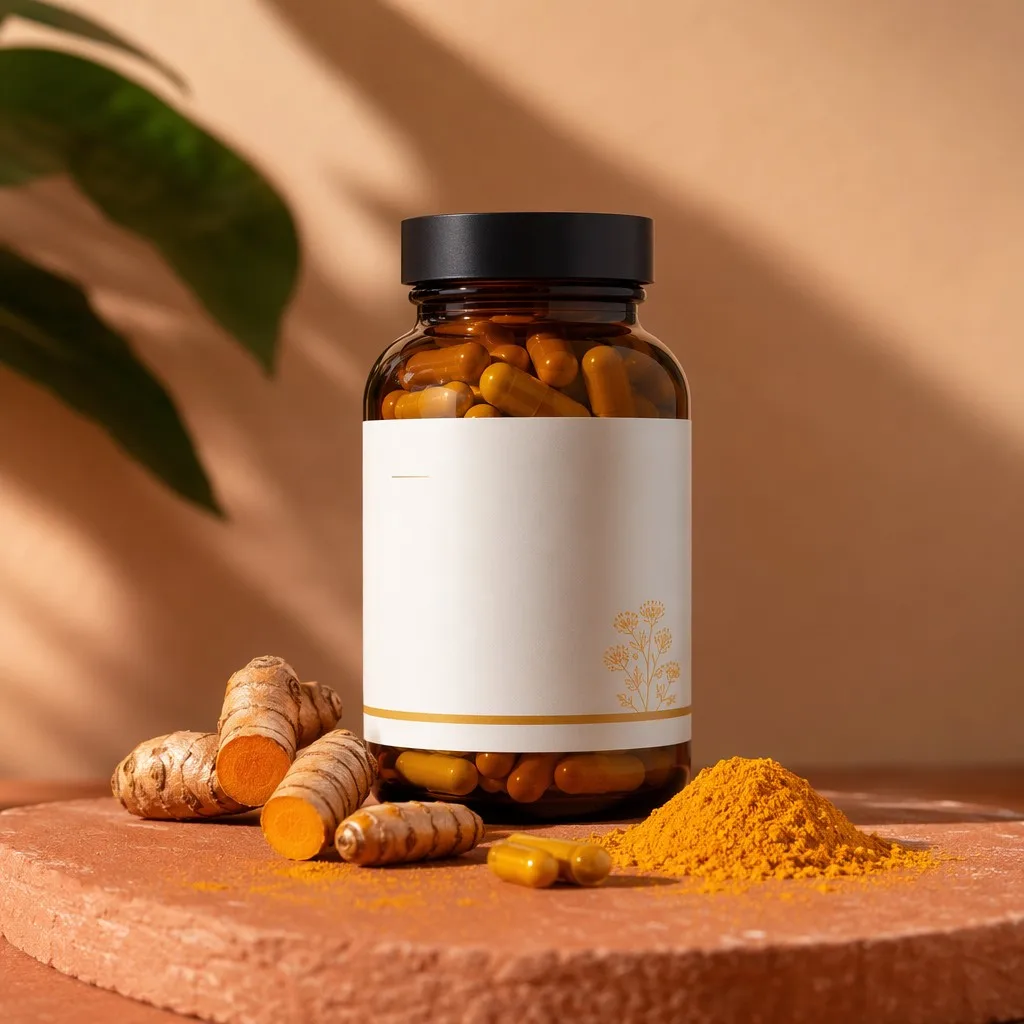
Advanced Curcumin with BioPerine®
Standardized to 95% Curcuminoids for maximum potency and inflammation support.
Shop Now - $34Health Benefits Backed by Science
1. Joint Pain and Arthritis
Many studies show that curcumin can help treat symptoms of arthritis and is, in some cases, more effective than anti-inflammatory drugs. A study of patients with rheumatoid arthritis found that curcumin was even more effective than a common anti-inflammatory drug (diclofenac sodium) without the adverse side effects.
2. Fighting Systemic Inflammation
Inflammation is a double-edged sword. Short-term, it's vital for fighting pathogens. Long-term, it becomes chronic and attacks your own tissues. Curcumin is a potent anti-inflammatory that can match the effectiveness of some anti-inflammatory drugs, but without the gut-lining damage often associated with NSAIDs.
3. Brain Health and BDNF
Curcumin can increase brain levels of Brain-Derived Neurotrophic Factor (BDNF), a type of growth hormone that functions in your brain. Many common brain disorders have been linked to decreased levels of this hormone, including depression and Alzheimer’s disease.
4. Heart Health
Curcumin may improve the function of the endothelium, which is the lining of your blood vessels. Endothelial dysfunction is a major driver of heart disease and involves an inability of your endothelium to regulate blood pressure, blood clotting, and various other factors.
How to Choose a Quality Curcumin Supplement
Don't be fooled by cheap "Turmeric" bottles that contain 500mg of root powder with no standardization. To get therapeutic results, look for these three pillars:
- Standardization: Ensure the label says "Standardized to 95% Curcuminoids." This guarantees you are getting the concentrated active compound.
- Absorption Catalyst: Look for BioPerine® or a liposomal delivery system.
- Purity: Third-party testing is essential to ensure no heavy metal contamination, which can be an issue with root-derived products.
At FireRoot, our Curcumin Capsules are formulated specifically to meet these criteria, balancing the Fire element within the body by clearing "heat" (inflammation) and promoting smooth blood flow.
Dosage & Safety
Most clinical studies use a dosage of 500–2,000 mg of turmeric per day, usually in the form of an extract with a high concentration of curcumin. For FireRoot's standardized extract, one to two capsules daily is generally sufficient for maintenance.
Curcumin is generally considered safe, but those on blood-thinning medications should consult their doctor, as curcumin has mild anticoagulant properties. Similarly, if you have gallstones or bile duct obstructions, proceed with caution.
Frequently Asked Questions (FAQ)
Can I take curcumin every day?
Yes, curcumin is generally recognized as safe for daily consumption. In fact, its anti-inflammatory benefits are cumulative, meaning they build up over time with consistent use.
How long does it take to see results?
While some feel improved joint comfort within a few days, most clinical trials show the most significant results after 4 to 8 weeks of consistent supplementation.
Can I just eat more turmeric powder?
Culinary turmeric is great for flavor and mild wellness, but to get the equivalent of one 500mg curcumin capsule (95%), you would need to consume roughly 15-20 grams of turmeric powder—which is about 3-4 tablespoons! Most people find a capsule much more convenient and easier on the palate.
Not sure which element you are?
Fire element governs the heart and circulation. If you're feeling "burnt out" or experiencing "heat," your Fire might be out of balance.
Take the 5-Element QuizReady to explore more? Check out our Moringa Capsules for a nutrient boost or our Ginkgo Biloba for cognitive clarity.